The post Your Child’s First Teeth appeared first on Pender Dental Care.
]]>Eruption of Baby Teeth
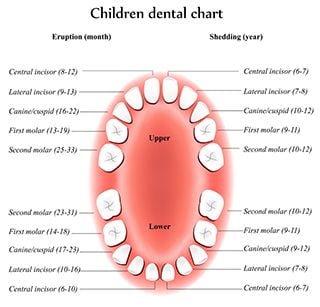
Baby teeth typically erupt in the lower front teeth region, with most children obtaining all their baby teeth by three years old. For some children, this timeline varies. Some may not experience their first erupted baby tooth until their first birthday.
Teething
Teething is an indicator that your child’s baby teeth are coming in, and is usually accompanied by slight discomfort, excessive drooling, and swollen or tender gums. Some tips to remember when teething begins include:
- Massage your child’s gums with a clean finger to ease some discomfort.
- Offer a solid, not liquid-filled, teething ring (can be frozen).
- Offer a clean, frozen, or wet washcloth.
- Offer a teething biscuit, but be sure to monitor your child while they eat it.
- If discomfort persists, talk to your child’s pediatrician about a safe dose of liquid acetaminophen.
- Avoid teething tablets that contain belladonna and benzocaine gel, as these substances can be potentially toxic to your child.
- Never use a teething necklace, as your child will be at risk for strangulation or choking.
Proper Oral Hygiene
Once your child’s first tooth comes in, you will need to begin an oral hygiene routine with them. The process slightly changes as they grow, so some helpful tips include:
- Brushing twice a day with a grain-of-rice-sized dollop of fluoride toothpaste, especially after consuming foods or beverages.
- Refrain from letting your child go to bed with a bottle since this can lead to tooth decay.
- When your child turns three years old, you may increase fluoride toothpaste to a pea-sized amount when brushing.
- When your child is at the developmental stage where they can spit, teach them to spit out the excess toothpaste after brushing.
- It’s recommended that the parent place the toothpaste on their child’s toothbrush until they reach six years of age.
- Parents should monitor and assist their child while brushing until they reach seven or eight years old.
Importance of Fluoride
Fluoride is an essential mineral for preventing tooth decay, as it works to harden the enamel of the teeth. Fluoride is often found in tap water, rarely ever bottled, so it’s a good idea to give your child tap water when they begin eating solid foods. If you feel that your child is not consuming enough fluoride, talk to your pediatric dentist about fluoride supplements.
The post Your Child’s First Teeth appeared first on Pender Dental Care.
]]>The post Veneers appeared first on Pender Dental Care.
]]>Veneers are a popular choice for cosmetic enhancement because they are a straightforward and natural-looking way to create a brighter and more uniform smile. The veneer process is completed over several appointments:
- Consultation
You and your dentist discuss your goals for your smile and whether you’re a good candidate for veneers.
- Examination
Your teeth and gums are examined. Measurements, photographs, X-rays, and impressions are taken as needed.
- Preparation
A small amount of enamel is removed from the front of the tooth so that the veneer will fit flush with the tooth surface. An impression is taken of the prepared tooth and the teeth around it, and a color is chosen for the porcelain.
- Fabrication
The veneers are lab-fabricated to the desired shape and size, using the dental impression and the dentist’s detailed instructions for a precise fit and tint.
- Application
When the veneers are ready, they are placed at a final appointment. After checking for shape, color, and fit, and making adjustments if necessary, your dentist will clean the teeth and use dental cement to bond the veneers in place.
Are veneers right for you?
Before deciding on veneers, discuss with your dentist whether they’re the right choice for you:
- Veneers Are Permanent
Prepping for a veneer requires the removal of a small amount of tooth enamel, so veneers will need to be replaced if they are damaged or dislodged. Proper care keeps veneers their best and brightest.
- Veneers Aren’t for Everyone
Teeth and gums must be healthy before beginning the procedure. More serious orthodontic misalignments and habitual conditions such as tooth grinding and jaw clenching make veneers impractical.
- The Advantages of Veneers
While there are less expensive options for cosmetic restorations, veneers offer benefits that whitening and bonding treatments don’t.
-
- Veneers cover staining which whitening treatments alone can’t eliminate.
- The porcelain used is semi-translucent, like actual enamel, so the veneers will look more natural than bonding. Veneers are more stain resistant, too.
- Veneers are less vulnerable to chipping or other damage than bonding, and have a longer lifespan, typically lasting from ten to 15 years with proper care.
While the cost of veneers is comparable to the cost of crowns, veneers preserve more of the tooth’s underlying structure than crowns do.
If chips, gaps, stains, cracks, misshapen teeth, or other small imperfections in your smile are causing an outsized impact on your confidence, talk to your dentist to discover how veneers could be the right choice to restore and enhance your smile.
The post Veneers appeared first on Pender Dental Care.
]]>The post Tooth-Colored Fillings appeared first on Pender Dental Care.
]]>While composite resin fillings are the most well-known option, porcelain and glass ionomer fillings are also unobtrusive choices for a dental restoration. The filling you choose will depend, in part, on the filling’s size and location and the kind of filling you need.
- Direct fillings are completed in one appointment. The filling is bonded to the tooth immediately after any decay is removed and the tooth is cleaned and prepped.
- Indirect fillings take one of two forms: an inlay, which covers the surface of a molar inside the cusps, or an onlay, which covers the surface and at least one cusp.
After the tooth is free of decay, cleaned and prepped, an impression is taken of the tooth. The filling is created from this impression, and then bonded to the tooth during a second visit. Indirect fillings might also be used to repair small chips, fractures, and worn teeth.
Common Tooth-colored Restorations
Composite Resin Fillings
Made of acrylic resin mixed with powdered quartz, glass, or other ceramic particles, composite fillings can be used for both direct and indirect fillings. These are the most popular tooth-colored restorations.
- Can be applied to the tooth immediately after preparation
- Can be closely matched in color to tooth enamel
- Harden quickly under a special curing light
- Less expensive than porcelain fillings
- Preserve more tooth structure than metal amalgams
- Durable, but may not be as durable as porcelain or amalgam fillings for chewing surfaces
- Insurance coverage can vary depending on the location of the filling
Porcelain/Ceramic Fillings
These indirect fillings are made of advanced ceramic materials, fabricated using an impression of the prepared tooth for a precise fit.
- Most realistic looking because they are translucent as well as matched for color
- Typically last longer than composite fillings, and less likely to chip or crack
- More stain resistant than composite fillings
- Usually require at least two appointments
- More expensive than composite fillings
Glass Ionomer Fillings
Glass ionomer is a flexible paste made with silicate glass powder. Commonly used as a sealant or a cement for orthodontic brackets, glass ionomers can also be used in fillings.
- The material bonds directly to the tooth itself
- The glass powder can be formulated with fluoride, which is released over time for added anti-cavity protection
- Resin-modified ionomers are available that harden more quickly
- Don’t always blend as well with natural tooth color
- Less durable than other filling materials, so these fillings are better used in temporary fillings, to fill cavities along the gum line or other non-biting surfaces, or to fill baby teeth.
The size of a cavity, its location, cost considerations—these factors will all affect your choice of filling. Talk to your dentist to discover which tooth-colored option is best to protect the health and enhance the appearance of your smile.
The post Tooth-Colored Fillings appeared first on Pender Dental Care.
]]>The post Tooth Sensitivity appeared first on Pender Dental Care.
]]>Tooth anatomy helps explain why teeth can become sensitive:
- Enamel covers the crown, the visible part of the tooth above the gum line. Enamel is composed primarily of minerals and is the hardest substance in the body. Intact enamel protects the vulnerable tissues inside the tooth.
- Cementum covers the roots of the tooth and, while quite strong, is more porous and softer than enamel.
- Dentin lies just beneath the outer enamel and cementum. It’s a softer tissue filled with microscopic tubules that are connected to the pulp. When damaged enamel or cementum expose part of the dentin layer, the tooth becomes sensitive to things like temperature, sugars and acids, and touch.
- Inside the tooth and protected by the dentin layer are the pulp chamber and root canals. These are filled with pulp, living tissue composed of nerves, blood vessels, and connective tissue. If the pulp is damaged, the blood vessels inside become inflamed, putting pressure on the nerves and causing pain. Infection can set in, destroying pulp tissue and spreading to the surrounding gums and bone.
What causes sensitivity?
Sensitivity is a symptom that the tooth is compromised. You should see your dentist promptly to discover the source of and treatment for your discomfort.
- Tooth Decay
When a cavity is deep enough to penetrate the enamel and reach the dentin, sharp pain when eating certain foods, drinking hot or cold beverages, breathing through the mouth, or brushing can result. Sensitivity can also be a sign that a loose or broken filling needs replacement. Treating a cavity in its early stages or replacing a damaged filling right away prevents decay from reaching the inner pulp and endangering the tooth.
- Infection
Once decay has reached the pulp, the tooth is vulnerable to infection. This infection can spread to bone and gum tissue. Because the inner pulp contains nerves, infected and inflamed pulp can be very painful. Root canal treatment is often necessary to save the tooth.
- Trauma
A chip, crack, or fracture can damage tooth structure and expose dentin and pulp to bacteria. You should see your dentist immediately after any dental trauma. Crown, onlays, veneers, or other restorations can repair injured teeth and prevent further damage.
- Gum Disease
Periodontitis causes the gums to pull away from the teeth, exposing portions of the cementum covering the roots. Cementum is softer than enamel, and more prone to sensitivity and decay. If you have periodontitis, your dentist can recommend treatment options, including antibiotics, deep cleanings, and/or gum surgery.
- Acidic Erosion
Acids can erode tooth enamel, exposing the dentin underneath. Acidic foods should be enjoyed in moderation and eaten with meals. Sodas and energy drinks should be limited. Medical conditions such as acid reflux can be very damaging to enamel, especially on the back of the teeth, and should be treated by your physician. Enamel won’t grow back, but if you have suffered significant enamel erosion, your dentist might suggest fillings, crowns, bonding, or veneers.
- Abrasive Erosion
Aggressive brushing and hard-bristled brushes can be so abrasive that they cause enamel erosion and gum recession. Use a soft bristled or electric toothbrush, and brush thoroughly but gently. Your dentist can recommend better brushing techniques and toothpastes which reduce sensitivity.
- Tooth Grinding
Repetitive nightly grinding can put so much pressure on the teeth that the outer layer of enamel is worn away. Tiny cracks and fractures develop. Pulp inflammation can occur. A custom-fitted nightguard is a common treatment used to redistribute grinding pressures.
- Malocclusion
Too much pressure on a tooth caused by an unbalanced bite can lead to worn or cracked teeth or pulp inflammation. Orthodontic treatment is often recommended to create a healthy, balanced bite.
Tooth sensitivity shouldn’t be ignored. Any unpleasant or painful sensation which persists should be evaluated by your dentist to determine the cause of your sensitivity and to create a treatment plan for a pain-free smile.
The post Tooth Sensitivity appeared first on Pender Dental Care.
]]>The post Tooth Decay Prevention appeared first on Pender Dental Care.
]]>Tooth decay begins with the Streptococcus mutans bacteria. These bacteria join with food particles and fluids in the mouth to create plaque, a constantly forming biofilm which sticks to the surface of tooth enamel.
The bacteria in plaque convert the sugars in our foods into lactic acid. When plaque remains on the tooth, these acids erode the calcium phosphate minerals which make enamel the hardest substance in the body. This process, called demineralization, creates weak spots in the tooth surface.
Over time, a weak spot will become larger and deeper until a hole, or cavity, forms in the enamel.
Treating Tooth Decay and Cavities
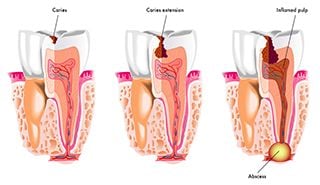 Because tooth enamel isn’t living tissue, it can’t regenerate or grow back. Once bacteria and acids have created a deep enough cavity, only a dentist can repair it by removing the decayed area of the tooth and restoring the tooth’s structure.
Without treatment, a cavity will continue to grow until it erodes the enamel and spreads into the interior of the tooth. Treatment for tooth decay will depend on how far the decay has progressed.
- Demineralization—Early tooth decay
Early signs of demineralization can show up as white spots where minerals have been stripped from the enamel. Demineralization is sometimes reversible with a professional fluoride treatment that remineralizes and strengthens tooth enamel.
- Enamel Decay
For small cavities in the enamel, a filling is generally recommended. The dentist will remove any decay, clean the area, and fill the tooth. Filling options include color-matched composite, silver dental amalgam, and gold fillings.
- Dentin Decay
Dentin lies just below tooth enamel. When decay reaches the dentin, it spreads more quickly because dentin is much softer than enamel. More extensive decay might require a larger filling or a crown.
- Pulp Decay
Left untreated, a cavity can grow until it reaches the living pulp inside the dentin. The pulp contains blood vessels and nerves, and, once damaged or infected, will require a root canal procedure and a crown to save the tooth.
- Extraction
When decay is so extensive that a tooth cannot be saved, extraction becomes necessary. A dental implant is often the best choice to replace a lost tooth because it prevents shifting in the remaining teeth and helps maintain jawbone density.
Preventing Tooth Decay
While there are many options for treating cavities, prevention is always best. Working together with your dental team, you can help prevent cavities with healthy dental habits and proactive treatments:
- Regular checkups can catch and treat early tooth decay before a cavity forms.
- Professional cleanings remove tartar and plaque you might have missed.
- Brush at least twice a day, for at least two minutes each time, to clean plaque from tooth surfaces.
- Floss at least once each day to remove plaque between the teeth and along the gum line.
- Use fluoride toothpaste, a proven way to strengthen and remineralize enamel.
- Consider professional fluoride treatments if you have a higher risk of tooth decay.
- Ask your dentist about sealants to protect molars from decay.
- Make sure your tooth-healthy diet is rich in nutrients like calcium, phosphorus, and vitamin D and low in sugars and acids.
The post Tooth Decay Prevention appeared first on Pender Dental Care.
]]>The post Tooth Contouring appeared first on Pender Dental Care.
]]>During the contouring procedure, a small amount of tooth enamel is removed to refine and reshape an imperfect tooth’s appearance and help it fit in with the surrounding teeth. Precision tooth sculpting can eliminate or markedly reduce small flaws such as:
- Irregular edges
- Minor chips
- Unequal tooth length
- Too-sharp canines
- Worn or flat edges
- Slight overlaps between teeth
- Minor bite problems caused by the teeth touching unevenly
Contouring is typically used to reshape the upper front and canine teeth because these teeth are the most visible. If you are interested in tooth contouring, talk to your dentist about which teeth might benefit, how your enamel can be reshaped, and the changes this will make in the overall appearance and health of your smile.
Once you’ve decided to enhance your smile with contouring, your dentist will examine your teeth and gums. You might need X-rays and/or dental treatment before contouring to make sure your teeth and gums are healthy enough for the procedure.
The procedure itself generally takes about 30 minutes per tooth. Because only the enamel is involved, anesthesia may not be necessary. Using a laser or a specially equipped drill, your dentist will gently remove a very small amount of enamel to refine the shape of the tooth. After this subtle shaping, the tooth will be polished for a smooth, even finish.
You might feel some vibration during the shaping and polishing process, and temporary tooth sensitivity sometimes occurs afterward.
Besides improving the appearance of your teeth, contouring offers additional benefits:
- Immediate results
- Minimally invasive treatment
- Little discomfort
- Less expensive than other cosmetic options
Tooth contouring is not the answer for every patient. If you have thin enamel, more seriously damaged or irregularly shaped teeth, or require orthodontic treatment, your dentist can provide you with other options to create a beautiful, healthy smile.
But when minor cosmetic flaws make you feel self-conscious about your smile, skilled aesthetic contouring might be exactly what you need. If tiny imperfections in your teeth are having an outsized impact on your confidence, talk to your dentist about tooth contouring.
The post Tooth Contouring appeared first on Pender Dental Care.
]]>The post Teeth Whitening appeared first on Pender Dental Care.
]]>At-home Whitening
Home treatments can be helpful in reducing surface stains. These methods are less expensive than in-office whitening, but, because they can’t offer the strength of professional whiteners, they aren’t as effective, and they usually require several weeks of daily application.
Whitening Toothpastes and Rinses
Whitening toothpastes and rinses use mild abrasives and bleaching agents, most often peroxides, to remove surface stains caused by foods, beverages, and smoking. They can also help keep teeth their brightest after a professional whitening. While toothpastes and rinses can’t do much to affect tooth color or deep staining, surface stains can show some improvement after several weeks.
Whitening Strips
These flexible plastic strips come in two sizes, to fit both upper and lower teeth, and are coated on one side with a thin film of peroxide-based gel. The gel-side of each strip is positioned on the front of the teeth and gently pressed into place. The strip needs to adhere to each tooth completely to ensure even whitening, and shouldn’t touch sensitive gum tissue to avoid irritation. The strips are usually recommended for use twice a day, for 30 minutes each time. Total treatment time can vary from several days to several weeks.
Stock Gel Trays
Gel tray whitening systems provide a mouthguard-like appliance that is filled with whitening gel and placed over the teeth. Trays can come pre-filled with gel or with individual gel applications in syringes. Stock trays aren’t always a perfect fit, and it’s important to make sure the whitening gel doesn’t contact the gums and other soft tissue in the mouth. Use time will vary with different manufacturers.
While all these whitening methods can brighten your smile, there are some circumstances which make a professional whitening your best option. Professional whitening agents are more powerful and can help eliminate darker stains which over the counter (OTC) products can’t remove. For those with deeper or darker staining, or for those who would like to see immediate results, in-office whitening is the best choice.
In-Office Treatment
An office whitening treatment is generally faster, more effective, and lasts longer because dentists use gels with a higher concentration of peroxide than those gels found in OTC products. Your dentist will examine you first to make sure your teeth and gums are healthy, protect your surrounding gum tissue and mouth during the procedure, and monitor treatment throughout. Office whitening usually takes from 30-90 minutes.
Light-Activated Whitening
Some office whitening treatments make use of halogen, LED, or UV lighting as part of the procedure. Light doesn’t whiten teeth itself. Instead, it works with the gel solution, activating the molecules in the whitening gel and speeding up the chemical reaction which eliminates stains.
Custom Gel Trays
Custom trays created in the dentist’s office are an option for those who want to use a whitening gel at home. Professionally crafted trays will fit your teeth perfectly and allow a more precise application of the peroxide gel, which will also be provided. Custom trays can require about two weeks of use for maximum whitening.
Some teeth are not good candidates for typical whitening procedures at home or in-office. If you have deeper discoloration caused by trauma or medications taken during tooth formation, or if you have dental bonding, veneers, crowns, or bridges which are darker than your natural enamel, talk to your dentist to decide which whitening treatment or cosmetic procedure is the best option to achieve your brightest smile.
The post Teeth Whitening appeared first on Pender Dental Care.
]]>The post TMD appeared first on Pender Dental Care.
]]>When the joint doesn’t function as smoothly as it should, the limited movement and discomfort which result could be caused by Temporomandibular Joint Disorder, or TMD.
Temporomandibular Joint Disorder can develop due to arthritis, bruxism (tooth grinding), genetics, an injury or infection near the jaw, a misaligned bite, or a combination of factors. Sometimes the cause is unclear. TMD could be indicated if you suffer from any of these symptoms:
- Painful chewing
- Persistent pain and discomfort around the TMJ or in the face or neck
- Earaches or ringing in the ears
- Changes in bite alignment
- Muscle spasms near the jaw
- Clicking, popping, or grating noises when the jaw moves
- Jaws that are limited in movement or lock open or shut
If you suspect you might have TMD, your dentist or doctor will conduct a careful examination of your temporomandibular joints, their range of movement, and your head and neck. When needed, imaging studies can be used for further examination of the joint.
TMD Treatments
Often, conservative treatment is effective in treating TMD. Your dentist or doctor will tailor treatment to the cause and symptoms of your TMD:
- Use of over-the-counter pain relievers, ice packs, and moist heat compresses
- Behavior modification for habits which can cause jaw pain (gum chewing, jaw clenching, nail biting, poor posture)
- Techniques for relaxation and stress relief
- Muscle relaxants, corticosteroids, or anti-inflammatory medication
- Physical therapy
- A custom-fitted mouthguard, bite plate, or bite splint to protect teeth and jaw from the pressures of tooth grinding
- Dental treatment to improve minor bite misalignment
- Orthodontic treatment to treat more serious bite misalignment
If necessary, surgical procedures can provide more extensive examinations and treatment. These include:
- Arthroscopy: A minimally invasive procedure performed under anesthesia, which uses a thin tube with a video lens and light inserted through a small incision in front of the ear. This technology allows the surgeon to get a close look at the joint and the area surrounding it. Arthroscopic surgery can repair some types of TMJ damage.
- Arthroplasty: Surgery performed under anesthesia, can repair, replace, or reposition damaged parts of the joint. Arthroplasty can be used to remove bony growths, repair or replace the articular disc that cushions your joint, and access areas that an arthroscopy can’t.
Jaw pain isn’t always due to TMD, and many cases of TMD are temporary. But frequent discomfort, limited movement, or any other persistent symptoms are a good reason to see your dentist or doctor for a thorough examination and diagnosis. Prompt treatment will help prevent further damage to the joint and make facial and jaw movement comfortable once again.
The post TMD appeared first on Pender Dental Care.
]]>The post Snoring and Sleep Apnea appeared first on Pender Dental Care.
]]>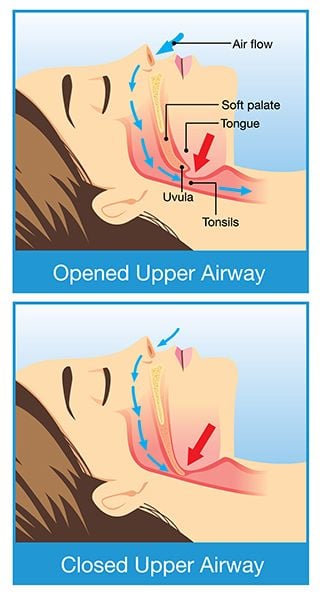
Snoring occurs when soft tissues in the throat area relax during sleep, partially blocking airways and vibrating with the passage of air. It’s this vibration which causes that distinctive snoring sound. If you’re one of the millions of people who snore, you know how those nocturnal noises can interfere with your peaceful sleep and the sleep of those around you.
Snoring can also be a symptom of sleep apnea, which is a serious medical condition. The word “apnea” is derived from the Greek word for “breathless.” When you suffer from sleep apnea, you briefly stop breathing during sleep.
Your body responds by waking every time you need to begin breathing properly again, often causing you to choke or gasp for breath. This cycle can repeat dozens of times per hour. While you may think you’ve slept through the night, you have never gotten the deep sleep your body needs to restore itself mentally and physically.
Types of Sleep Apnea
- Obstructive Sleep Apnea (OSA)
Obstructive sleep apnea is the most common form of sleep apnea and is caused by an obstructed airway. The throat muscles may relax as you sleep, making it impossible to inhale fully with each breath. Obstruction can also be caused by a physical condition such as a deviated septum, excess throat tissue or enlarged tongue or tonsils. The size and position of your jaw can affect your breathing as well.
- Central Sleep Apnea (CSA)
Central sleep apnea occurs when your brain fails to send the proper signals to the muscles which control breathing. Sleepers with CSA either stop breathing momentarily or take such shallow breaths that they can’t get sufficient air into their lungs.
- Complex Sleep Apnea
Complex sleep apnea combines features of both obstructive and central sleep apnea.
While men are more likely to develop this condition, sleep apnea can affect anyone. Factors such as obesity, increasing age, alcohol use, certain medications and drugs, medical conditions, and a family history of sleep apnea can also increase the risk of developing OSA and CSA.
How Sleep Apnea Affects Your Life
You (or your partner) may suspect sleep apnea if your sleep is interrupted by frequent loud snoring, choking, or snorting sounds, or if you appear to stop breathing or wake up short of breath throughout the night.
Sleep apnea affects your waking life as well. You might feel frequent daytime drowsiness or fatigue. You could have difficulty falling asleep at night or fall asleep involuntarily during the day. You might experience morning headaches or a sore throat or dry mouth when you wake up. Your quality of life can suffer, as insufficient sleep can lead to:
- Moodiness
- Frustration
- Depression
- Decreased libido
- Memory problems
- Inability to focus
If you have any of the symptoms of sleep apnea, you should seek prompt treatment. Sleep apnea can seriously impact health, and has been linked to an increased risk of:
- High blood pressure
- Heart disease
- Stroke
- Dangerous reactions to medications
- Dangerous reaction to general anesthesia
- Accidents and injuries caused by fatigue and slower reaction time
What kind of treatments are available?
Treatments ranging from behavior modification to surgery are tailored to the cause and the severity of your sleep apnea:
- Behavior modification: Losing weight, abstaining from alcohol, changing sleep position, and monitoring medications that affect sleep can be effective in mild cases of OSA.
- Oral appliances: These comfortable, custom-fitted devices can advance the jaw or hold the tongue forward to maximize airway space.
- Continuous Positive Airway Pressure (CPAP) machines: For those with moderate to severe sleep apnea, PAP machines provide pressurized air through a tube attached to a mask, delivering a gentle flow of air to keep airways open through the night.
- Surgery: Surgical procedures can remove or reduce the obstructions causing OSA. Medical implants have been successful in treating both OSA and CSA for patients who qualify for these treatments.
If you suspect your snoring is something more than a nightly nuisance, ask your dentist or doctor for a referral to a sleep apnea specialist. Proper diagnosis and treatment can help you enjoy the restorative sleep you need for healthier days and healthier nights.
The post Snoring and Sleep Apnea appeared first on Pender Dental Care.
]]>The post Smile Makeover appeared first on Pender Dental Care.
]]>Some of the reasons people are unhappy with their smiles include stained teeth, gaps, irregular gum lines, damaged or missing teeth, and misalignments. Your dentist can help you achieve a healthy, aesthetically pleasing smile with a range of treatment options, including:
- Teeth Whitening
Surface staining can be caused by external factors such as diet, tobacco use, or inadequate oral hygiene. Brighten your smile with a whitening treatment in your dentist’s office. Professional whitening is generally faster, more effective, and longer-lasting than at-home products. If deep stains make whitening treatments impractical, you might consider bonding or veneers.
- Tooth Contouring
Small chips, minor size and shape irregularities, slight overlaps—teeth which need minimal cosmetic restoration can benefit from tooth contouring. Your dentist will remove a small amount of enamel to reshape tooth and then polish it for a smooth, even appearance. Contouring is cost-effective and generally requires no anesthetic, but cannot be used to treat more seriously damaged or misaligned teeth.
- Bonding
In this procedure, composite resin is shaped and bonded to the tooth’s surface to repair minor chips and cracks, cover discolored enamel, close small gaps between teeth, reshape undersized, crooked, or misshapen teeth, and rebuild areas where enamel erosion has taken place. Bonding is convenient, cost-effective, and minimally invasive.
- Veneers
A dental veneer is a thin, translucent, durable porcelain shell which is custom-made to cover the front of a damaged tooth. Like bonding, veneers can restore the appearance of teeth with chips, cracks, and stains, can close small gaps between the teeth, and can reshape misshapen or slightly misaligned teeth.
- Crowns
Crowns cover the entire tooth above the gumline. Porcelain and ceramic crowns look like natural teeth and can be used to restore the appearance of teeth with more serious fractures, cracks, and shape irregularities.
- Implants
Implants are natural-looking and functional replacements for lost teeth. A screw-like post is implanted in the jawbone, where it fuses with the bone over several months to act as the tooth’s “root.” Once the post is secure in the jaw, a replacement tooth, usually in the form of a crown, is fixed in place. Implants do more than make your smile complete again; they help prevent the jawbone underneath the lost tooth from shrinking and stop nearby teeth from shifting out of place.
- Crown Lengthening
Also known as a gum lift, this procedure is frequently used to treat a “gummy smile.” When excess gum tissue covers the tooth surface, teeth appear shorter and smaller. During a gum lift, small areas of excess gum tissue are removed to reveal more of the tooth’s structure, making teeth look longer and more proportional.
- Gum Contouring
Gum contouring is another common periodontal procedure. An uneven gum line can make one or more teeth appear misshapen or shorter than the rest, causing a “crooked smile.” Gum contouring aesthetically reshapes the gum tissue for a natural-looking, even gum line.
- Gum Grafts
When gum recession exposes the roots of the teeth, teeth appear longer and the roots are more vulnerable to decay. Gum grafting replaces missing gum tissue with your own or donor tissue to create an attractive, healthy gum line that protects your roots while enhancing your smile.
- Aligners
Clear aligners are a discreet way to treat tooth and bite misalignment. Today’s aligners can treat a variety of orthodontic conditions, and are inconspicuous, efficient, and convenient. Your dentist can let you know if aligners will work for you.
Don’t let cosmetic imperfections make you hesitant to share your smile with the world. Talk to your dentist to discover how cosmetic dentistry can enable you to realize your goal of a beautiful, healthy, and confident smile.
The post Smile Makeover appeared first on Pender Dental Care.
]]>