The post Replace missing teeth with dental implants appeared first on Pender Dental Care.
]]>What are Dental Implants?
Dental implants are small metal posts that securely hold replacement teeth in place. They are versatile and can be used with dental crowns, bridgework, or implant-supported dentures. Dental implants are situated below the gum line and are not visible once the prosthetic teeth are in place.Dental implants are placed in bone tissue in the jaw area, which makes them extremely secure. The metal implants fuse to the bone over time so they will remain in place permanently. Candidates for this exciting tooth-replacement option must have enough bone tissue to support the dental implants. Unfortunately, tooth loss often leads to bone loss so not everyone who is missing teeth will be able to replace them with dental implants. The skilled dentists at our office Fairfax can determine if dental implants are an option for restoring your smile.
Benefits of Dental Implants
There are many benefits to replacing missing teeth with dental implants. Since they permanently bond with bone tissue, dental implants are extremely secure. There is no need to worry about your replacement teeth coming loose when eating or speaking. In addition to being a secure method for restoring your smile, dental implants also restore tooth functioning. Missing teeth can make it difficult to eat certain foods. Replacing those teeth with dental implants improves your ability to bite and chew different foods.
Another benefit of restoring your smile with dental implants is that many of the side effects of tooth loss will diminish. There is less support for facial muscles when teeth are missing, which can result in drooping or sagging of the face. Speech can also be affected if the tongue slips into the gaps where there are no teeth. Additionally, the remaining natural teeth can endure excess strain by compensating for the missing ones. By replacing missing teeth, dental implants help minimize or reverse these side effects.
Dental implants also have the benefit of preserving bone tissue, which can diminish with tooth loss. When there are no teeth for the bone to support, the body naturally reabsorbs the bone tissue over time. Placing dental implants directly in the bone helps prevent the body from reabsorbing it so bone tissue is preserved.
Securely replace missing teeth and restore your smile with dental implants. option. Schedule an appointment with Dr. Kim or Dr. Peaks to find out if you are a candidate for dental implants by calling Pender Dental Care in Fairfax at (703) 865-6880. Our South Riding office can be reached at (703) 327-2424.
The post Replace missing teeth with dental implants appeared first on Pender Dental Care.
]]>The post Your First Orthodontic Visit appeared first on Pender Dental Care.
]]>What happens at the initial appointment?
- Introductions: Getting braces for the first time can be daunting, so it’s important that proper introductions are made to help ease anxiety. You will meet with your orthodontic team; they will do everything they can to make sure you’re comfortable.
- Paperwork and health history: A team member will ask you to fill out paperwork regarding your relevant health history. It also informs your orthodontic team if you’ve had X-rays in the past or any previous oral issues you may have experienced.
- Exam and X-rays: During a thorough examination of your teeth, an orthodontic team member will use advanced 3D scanning, X-rays, and visual inspection. This helps them understand the unique needs of your teeth to build an effective treatment plan.
- Treatment plan: Generally, there may be a few orthodontic treatment options available to you. Together with your team, you will decide which plan works best for you. This can even be based on budget, predicted results, and treatment length.
- Patient questions: Once a treatment plan has been chosen, you will be given the floor to ask any and all questions. Your orthodontic team wants to make sure you have a solid understanding of what to expect in the next coming months, so questions are highly encouraged in order to address concerns and alleviate anxiety.
- Finances: A team member will review your insurance and discuss the payment options for your treatment. Some orthodontic offices offer flexible financing options or payment plans to help make costs more manageable.
- Your next appointment: Once your first appointment is completed, a team member will schedule your following appointment to put your treatment plan into action.
The post Your First Orthodontic Visit appeared first on Pender Dental Care.
]]>The post Your Child’s First Teeth appeared first on Pender Dental Care.
]]>Eruption of Baby Teeth
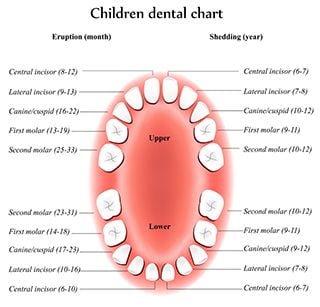
Baby teeth typically erupt in the lower front teeth region, with most children obtaining all their baby teeth by three years old. For some children, this timeline varies. Some may not experience their first erupted baby tooth until their first birthday.
Teething
Teething is an indicator that your child’s baby teeth are coming in, and is usually accompanied by slight discomfort, excessive drooling, and swollen or tender gums. Some tips to remember when teething begins include:
- Massage your child’s gums with a clean finger to ease some discomfort.
- Offer a solid, not liquid-filled, teething ring (can be frozen).
- Offer a clean, frozen, or wet washcloth.
- Offer a teething biscuit, but be sure to monitor your child while they eat it.
- If discomfort persists, talk to your child’s pediatrician about a safe dose of liquid acetaminophen.
- Avoid teething tablets that contain belladonna and benzocaine gel, as these substances can be potentially toxic to your child.
- Never use a teething necklace, as your child will be at risk for strangulation or choking.
Proper Oral Hygiene
Once your child’s first tooth comes in, you will need to begin an oral hygiene routine with them. The process slightly changes as they grow, so some helpful tips include:
- Brushing twice a day with a grain-of-rice-sized dollop of fluoride toothpaste, especially after consuming foods or beverages.
- Refrain from letting your child go to bed with a bottle since this can lead to tooth decay.
- When your child turns three years old, you may increase fluoride toothpaste to a pea-sized amount when brushing.
- When your child is at the developmental stage where they can spit, teach them to spit out the excess toothpaste after brushing.
- It’s recommended that the parent place the toothpaste on their child’s toothbrush until they reach six years of age.
- Parents should monitor and assist their child while brushing until they reach seven or eight years old.
Importance of Fluoride
Fluoride is an essential mineral for preventing tooth decay, as it works to harden the enamel of the teeth. Fluoride is often found in tap water, rarely ever bottled, so it’s a good idea to give your child tap water when they begin eating solid foods. If you feel that your child is not consuming enough fluoride, talk to your pediatric dentist about fluoride supplements.
The post Your Child’s First Teeth appeared first on Pender Dental Care.
]]>The post Your Child’s First Dental Appointment appeared first on Pender Dental Care.
]]>Introductions
It’s important to try to establish a non-threatening relationship between your child and their dentist. To help this along, your dentist may ask you to sit in the dental chair with your child during the examination. Or, your dentist may ask you to wait in the reception area during part of the appointment, so that a positive connection between your child and the dentist can be built. The method to ease your child’s anxiety depends on the child’s personality. Some children don’t fear the dentist at all.
Examination
During your child’s examination, the pediatric dentist will evaluate the health and development of the baby teeth, including checking for tooth decay, bite, or any oral issues with the gums, jaw, or surrounding tissues. If needed, the dentist will clean the teeth and determine your child’s need for fluoride. Asking questions will be encouraged and the dentist will educate the parent about proper oral hygiene and dental development issues to look for.
Proper Oral Hygiene
Providing education about maintaining your child’s oral hygiene is a big part of the first appointment. The routine slightly changes as your child develops, so some helpful tips your dentist may provide you with include:
- Watching out for signs that your child is teething; this is the indicator that their baby teeth have begun to erupt.
- Maintaining proper nutrition for healthy teeth.
- Brushing twice a day with a grain-of-rice-sized dollop of fluoride toothpaste, especially after consuming foods or beverages.
- Teaching your child to spit out excess toothpaste after brushing.
- Refraining from letting your child go to bed with a bottle since this can lead to cavities.
- Increasing fluoride toothpaste to a pea-sized amount after the age of three.
- Watching if your child develops any bad oral habits, such as thumb sucking, tongue thrusting, or lip smacking.
- Placing the toothpaste on your child’s toothbrush until they reach six years of age.
- Monitoring and assisting your child while brushing until they reach seven or eight years old.
- Scheduling dental checkups once every six months to help build your child’s comfort with their dentist, monitor tooth development, and to treat any oral problems that arise.
The post Your Child’s First Dental Appointment appeared first on Pender Dental Care.
]]>The post Wisdom Teeth Removal appeared first on Pender Dental Care.
]]>Complications of Impacted Wisdom Teeth
- Higher risk for tooth decay: Wisdom teeth are more difficult to clean because of the position in which they erupt. Food and bacteria stay trapped between the gum and the impacted tooth, no matter how thoroughly you brush.
- Overcrowding and damage to surrounding teeth: If your wisdom tooth applies force against the second molar as it erupts, damage can be done to the second molar, which increases the risk of infection. The pressure from your wisdom tooth can also cause overcrowding of the other teeth or cause an abnormal bite to form, which will require orthodontic treatment to fix. For some, the jaw is simply too small to accommodate all the teeth.
- Cyst developing in the jawbone: There is a sac in the jawbone in which the wisdom tooth develops. The sac can fill with fluid, forming a cyst that can cause damage to the jawbone, teeth, and nerves. In some serious cases, a benign tumor may even form. At this point, removal of tissue and bone might be necessary.
- Higher risk of developing gum disease: Since thorough dental hygiene is more difficult with wisdom teeth, there’s an increased risk of developing pericoronitis, a painful and inflammatory gum condition.
Before the Procedure
It’s understandable to feel anxious about extracting your wisdom teeth, but it’s best for them to be removed in order to avoid headaches and consistent pain in the back of your mouth. It is best to have your wisdom teeth removed as soon as they begin to develop. When you’re young, the wisdom teeth roots aren’t yet fully developed. This makes the procedure a bit easier on your surgeon and helps with a quicker recovery time. Before making a decision to remove wisdom teeth, your dentist will first assess your mouth and take X-rays.
After the Procedure
Your surgeon will provide you with post-operative instructions. You will be advised to eat soft foods for a few days and clean out the extraction site after each meal. A syringe will be provided for you to fill with water and flush out any food particles stuck at the extraction site. This is the best way to prevent alveolar osteitis, also known as dry socket. When a tooth is removed from a healthy socket, blood clots form and the healing process begins. Dry sockets happen when the healing process is hindered in some way. If you notice any extreme pain or sensitivity after your procedure, you may have developed a dry socket. This condition requires immediate treatment by your dentist.
The post Wisdom Teeth Removal appeared first on Pender Dental Care.
]]>The post Whitening Traumatized Teeth appeared first on Pender Dental Care.
]]>Tooth Pulp Determines Procedure
There are two procedures available to whiten traumatized teeth, each specialized to the unique trauma your teeth have suffered. The first step is to evaluate the traumatized teeth to see if the pulp inside the teeth still lives. X-rays or other tests can determine this. If the pulp is alive, your dentist can perform a normal external bleaching of your teeth.
At times, discoloration may indicate an underlying problem in the teeth, such as irreversible damage or death to the pulp. Before any whitening treatments can occur, the pulp will need to be removed through a root canal procedure. Once you have healed, your dentist can perform internal bleaching of your teeth.
Internal Bleaching
Your dentist will begin by first making a small hole in the back of your tooth, to gain access to the pulp chamber. Extra debris will be rinsed away before your dentist adds a special cement that will prevent the whitening agent from reaching the roots. The whitening agent is then put into the space and sealed shut. You will need to come back to your dentist a few more times to repeat this procedure until you gain the tooth shade desired. Once the tooth has been whitened to your satisfaction, a dental restoration, such as a tooth-colored filling, is placed over the hole originally created in the tooth.
If you are unsatisfied with the discoloration of your teeth due to a trauma, talk to your dentist about your options. External bleaching may be enough to whiten your teeth, but if not, internal bleaching may be your best option to gain the bright, white smile you desire.
The post Whitening Traumatized Teeth appeared first on Pender Dental Care.
]]>The post Veneers appeared first on Pender Dental Care.
]]>Veneers are a popular choice for cosmetic enhancement because they are a straightforward and natural-looking way to create a brighter and more uniform smile. The veneer process is completed over several appointments:
- Consultation
You and your dentist discuss your goals for your smile and whether you’re a good candidate for veneers.
- Examination
Your teeth and gums are examined. Measurements, photographs, X-rays, and impressions are taken as needed.
- Preparation
A small amount of enamel is removed from the front of the tooth so that the veneer will fit flush with the tooth surface. An impression is taken of the prepared tooth and the teeth around it, and a color is chosen for the porcelain.
- Fabrication
The veneers are lab-fabricated to the desired shape and size, using the dental impression and the dentist’s detailed instructions for a precise fit and tint.
- Application
When the veneers are ready, they are placed at a final appointment. After checking for shape, color, and fit, and making adjustments if necessary, your dentist will clean the teeth and use dental cement to bond the veneers in place.
Are veneers right for you?
Before deciding on veneers, discuss with your dentist whether they’re the right choice for you:
- Veneers Are Permanent
Prepping for a veneer requires the removal of a small amount of tooth enamel, so veneers will need to be replaced if they are damaged or dislodged. Proper care keeps veneers their best and brightest.
- Veneers Aren’t for Everyone
Teeth and gums must be healthy before beginning the procedure. More serious orthodontic misalignments and habitual conditions such as tooth grinding and jaw clenching make veneers impractical.
- The Advantages of Veneers
While there are less expensive options for cosmetic restorations, veneers offer benefits that whitening and bonding treatments don’t.
-
- Veneers cover staining which whitening treatments alone can’t eliminate.
- The porcelain used is semi-translucent, like actual enamel, so the veneers will look more natural than bonding. Veneers are more stain resistant, too.
- Veneers are less vulnerable to chipping or other damage than bonding, and have a longer lifespan, typically lasting from ten to 15 years with proper care.
While the cost of veneers is comparable to the cost of crowns, veneers preserve more of the tooth’s underlying structure than crowns do.
If chips, gaps, stains, cracks, misshapen teeth, or other small imperfections in your smile are causing an outsized impact on your confidence, talk to your dentist to discover how veneers could be the right choice to restore and enhance your smile.
The post Veneers appeared first on Pender Dental Care.
]]>The post Ultrasonic Cleanings appeared first on Pender Dental Care.
]]>Benefits of Using Ultrasonic Cleaning
- Comfort: With no metal scraping and abrasive sounds, ultrasonic cleaning makes for a much more comfortable experience over manual metal scalers. For some mouth shapes and sizes, manual scaling can also be a little uncomfortable. Ultrasonic cleaners reduce that discomfort significantly.
- Efficiency: More hardened tartar is removed at once compared to other scaling methods.
- Effectiveness: Ultrasonic cleanings are highly effective for removing plaque underneath the gum line, which can prevent and treat gum disease
- Improved appearance: Ultrasonic cleaning help reduce the appearance of tooth stains, giving you a whiter and brighter smile.
Ultrasonic Cleaning Procedure
When your oral hygiene routine of brushing and flossing at home is no longer enough to remove hardened deposits from your teeth, or if you’re suffering from gum disease, it’s time to see your periodontist for an ultrasonic cleaning.
- For hardened deposits: If you have a substantial buildup of tartar or plaque, ultrasonic cleaning can remove these substances quickly and with less discomfort than traditional methods. Manual scrapers take a considerable amount of time to rid the teeth of all hardened deposits.
- For gum disease: For mild stage gum disease, periodontal pockets develop below the surface of your gum line. These pockets fill with bacteria, tartar, and plaque, and attack your gum and bone tissue. Periodontal pockets cannot be reached with a toothbrush or floss, so they require a deep dental cleaning to remove the debris, before it can lead to tooth loss and other complications.
The post Ultrasonic Cleanings appeared first on Pender Dental Care.
]]>The post Types of Braces appeared first on Pender Dental Care.
]]>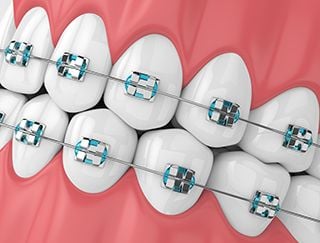
Traditional metal braces are the most common type of braces, as they correct a variety of orthodontic conditions and are generally the most affordable. Made of high-grade stainless steel, metal braces straighten your teeth using metal brackets and archwires. With metal braces, you have the option of adding colored elastics (ligatures) for a unique and colorful smile.
Self-Ligating Braces
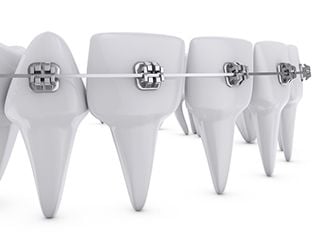
Traditional braces make use of bands around the brackets to hold the adjusting wire in place. “Self-ligating” means “self-binding” or “self-tying.” These braces use brackets, but with a very different design. Self-ligating brackets have mechanisms such as doors or clips, which hold the wire to the bracket without the need for rubber bands or metal ligatures. Without these ligatures, brackets are smaller and less noticeable. They also don’t need as many adjustments, so you’ll require fewer appointments and generally undergo a shorter treatment time.
Clear Braces
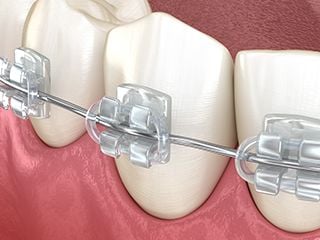
Clear braces use brackets made of clear or tooth-colored ceramic, which blend beautifully with the color of your tooth. The elastic ligatures, or rubber bands, can be chosen to match the brackets or your enamel.
Clear brackets can sometimes be somewhat larger (though this isn’t always the case), and, because they can be more abrasive than their metal counterparts, they are often recommended for upper teeth only.
Clear Aligners
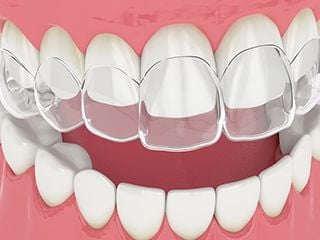
Clear aligners use a series of custom-made trays that shift teeth gradually into place. For patients who need mild-to-moderate corrections, this can be a great option.
In addition to being clear, you can change your aligners at home instead of having to visit our office every few weeks. They can even be removed while you eat, brush, and floss.
Lingual Braces
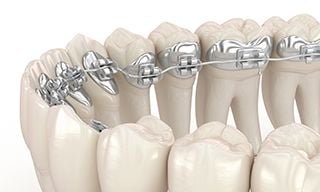
If you want corrective braces but don’t like the look of traditional braces with the metal showing on the front, you have an alternative in lingual braces. As opposed to metal braces visible across the front of the teeth, lingual braces are placed on the backsides of the teeth. Most of the metal in lingual braces is not visible to other people, unless you have widely spaced teeth.
Lingual braces are just as effective as traditional braces and are worn for the same amount of time. They are helpful for people who play contact sports or play wind instruments because lingual braces don’t get in the way. Finally, lingual braces are a great option for patients who are sensitive to plastic and can’t wear other types of clear or invisible braces.
The post Types of Braces appeared first on Pender Dental Care.
]]>The post Types of Appliances appeared first on Pender Dental Care.
]]>Elastics are small rubber bands that help move teeth into proper alignment. Typically, one side is connected to the top jaw and the other side to the bottom jaw, and are helpful in creating an ideal bite.
Forsus Nitinol Flat Spring
A Forsus is a small rod with a spring surrounding it, and is meant to replace or prevent the need of a headgear or even jaw surgery. These are typically used to address overjet or an overbite.
Headgear
A headgear is used to treat patients with either an overbite, where the front jaw extends well beyond the lower jaw, or an underbite, where the lower jaw rests in front of the top jaw. Headgear gently “pulls” on the orthodontic appliance in your mouth to encourage ideal jaw placement.
Herbst® Appliance
This appliance attaches to the back teeth and applies constant forward pressure on the lower jaw, and constant backwards pressure on the upper jaw in order to correct an overbite.
Palatal Expander
This device is used to widen the upper jaw. Adjustments are made periodically to maintain pressure on the jaw so that it keeps growing. Once you’ve achieved desired expansion, you will wear the appliance for several months to solidify progress made.
Positioners
Similar in feel to clear plastic retainers, positioners are used to complete final tooth movement and placement without the need for braces.
Retainers
Made from plastic, metal, or a combination of both, retainers are necessary to help keep your teeth in place once your braces come off.
Separators or Spacers
Separators or spacers are tiny rubber bands that are placed between your back teeth. The bands push the teeth apart, making space for metal bands, which hold other appliances in place, like braces or palatal expanders.
Twin Block Appliance
The twin block appliance is made of two acrylic blocks that work together to advance the lower jaw position and correct an overbite. This appliance is made to be worn full time, including while eating, though it is removable for easy hygiene.
Mara Appliance
MARA stands for Mandibular Anterior Repositioning Appliance. It is not removable and anchored to the molars, requiring periodic adjustment by your orthodontist. It works to encourage lower jaw growth to correct severe overbites.
The post Types of Appliances appeared first on Pender Dental Care.
]]>